The “sleep pressure system” that may explain why you keep waking up at 3 AM and what researchers discovered about supporting this natural sleep signal
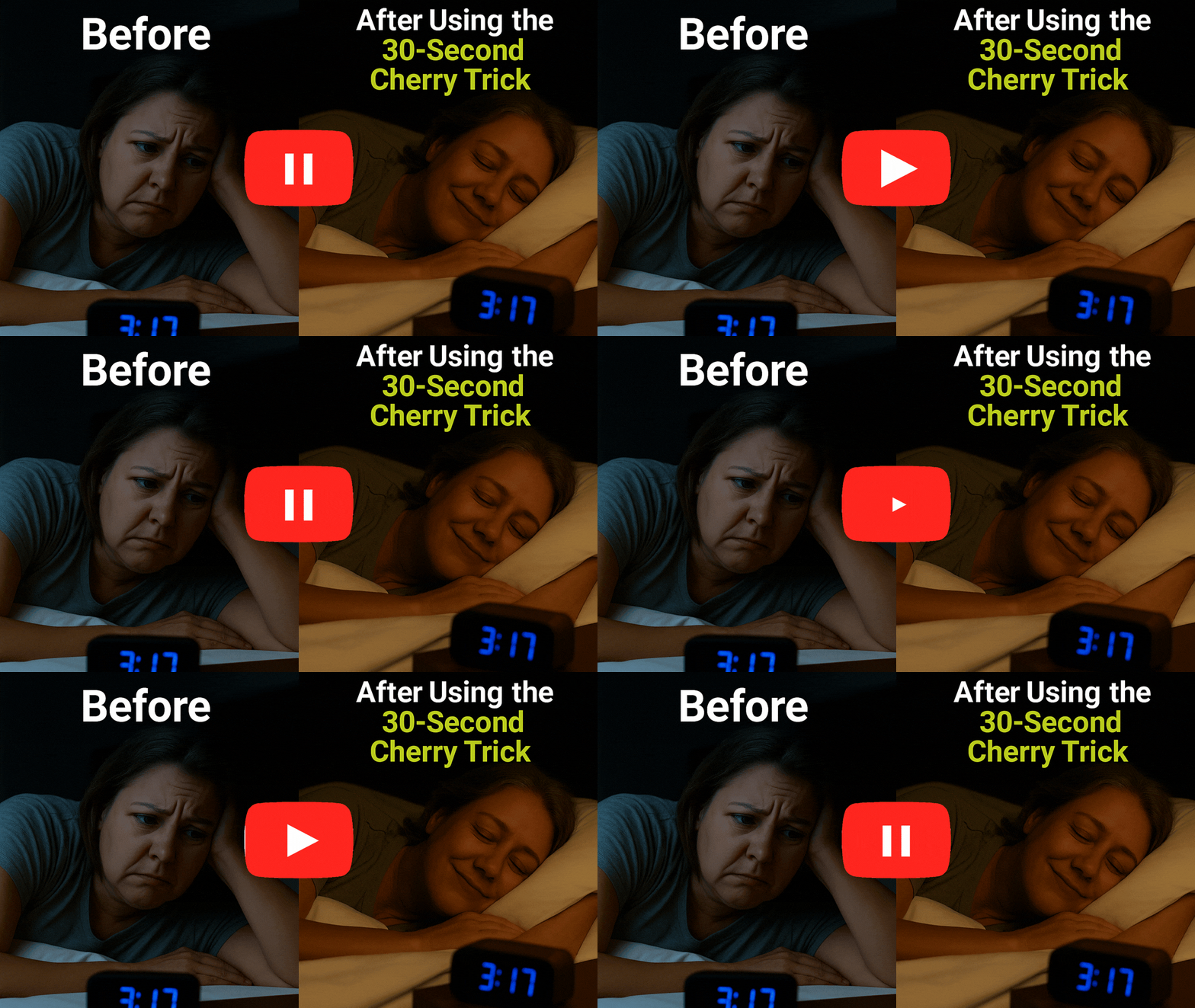
Make sure your sound is on
You can fall asleep just fine… but a few hours later, your eyes suddenly pop open.
It’s 3 AM. And somehow, your brain decides it’s the perfect time to replay everything on your mind.
Maybe you’ve already tried melatonin, herbal teas, supplements, and other sleep solutions.
You may have even experimented with higher doses. Yet somehow, you’re still waking up in the middle of the night.
And the worst part isn’t just losing a few hours of sleep. It’s dragging yourself out of bed the next morning,
relying on coffee to get through the day, and wondering where that energy you had years ago went.
When this happens night after night, it starts affecting more than just your time in bed.
Your focus suffers, your mood changes, and even simple things during the day can feel like they take twice the effort.
And there’s another side nobody talks about enough: poor sleep can affect how present you feel with the people you love.
You don’t just want to sleep better. You want to feel like yourself again.
But what if the problem isn’t simply your age, stress, or a lack of discipline?
Researchers started looking at something different: a natural mechanism known as the
sleep pressure system — the process that helps your brain naturally build up the need for sleep throughout the day.
According to this theory, modern life may interfere with the signals this system needs to work properly.
Which means you may not be “broken” or simply getting too old to sleep well.
What makes this discovery so interesting is that it changes the question. Instead of simply trying to
“knock yourself out,” researchers began looking at ways to support the body’s own natural signals involved in sleep.
One of those signals is connected to adenosine, a compound that naturally builds up while you’re awake
and helps increase your sleep drive when the time is right.
And this is where things get really interesting: there’s a combination of natural compounds that has been studied for its role in different parts of this process —
from helping the nervous system relax to supporting the signals involved in your natural sleep cycle.
Some of them include magnesium, L-theanine, lemon balm, apigenin, tart cherry, and other compounds.
But the real question is how this combination was designed to work together.
The offer page features more than 36,498 reviews, along with stories from people who say they noticed changes in their sleep quality and nighttime awakenings.
One 56-year-old woman, for example, said she used to wake up around
3 AM and lie there for hours trying to fall back asleep.
She later reported sleeping through the night and waking up feeling more refreshed.
Another story is even more personal. One woman said she and her husband had been sleeping in separate beds for
two years because of her restless nights. According to her, after a few weeks, they were sleeping together again.
If you’re also waking up in the middle of the night and feel like you’ve already tried everything, it may be worth understanding this explanation before simply accepting that this is your new normal.
Watch the video while it’s still available to see how this mechanism works and why this approach is different from traditional sleep solutions.
Copyright © 2024 Health Pro News LLC – All Rights Reserved
This site and the products and services offered on this site are not associated, affiliated, endorsed, or sponsored by Clickbank, nor have they been reviewed, tested, or certified by Clickbank.